Patrick Darling
English 1100_C
Prof Young
Esports are starting to share the same characteristics as organised traditional sports, both in rules and for the players. Therefore, esports should be treated with the same respect that traditional sports get.
Tuesday, November 24, 2015

Monday, November 9, 2015
Essay 3 Topic
Patrick Darling
English 1100_C
11-9-15
Prof. Young


English 1100_C
11-9-15
Prof. Young
Video Games as a Sport? (Also known as an esport)
- Audiences growing as or more than tradition sports. (Current record 32 Million people.)

- Having continually increasing prize pools. (Current record 11 million dollars)

- Sponsors are moving away from Sports and to esports.


- Teams go through intense "Bootcamps" where they can spend up to 8 hours training.
- Physical injuries still happen, mainly wrist or hand related. Even drug tests.
Monday, October 26, 2015
3 Quotes from Kozol
Patrick Darling
10-16-15
"I asked how many white kids she had taught in the South Bronx in her career. 'I've been at this school for eighteen years,' she said. 'This is the first white student I have ever taught'"(Kozol 1).
- This quote stuck out because even though it was a long time ago since schools were desegregated, the schools are still very much segregated.
"Visitors to schools like these discover quickly the eviscerated meaning of the word, which is no longer a proper adjective but a euphemism for a plainer word that has apparently become unspeakable"(Kozol 3).
- In this quote Kozol is talking about the use of the word "diverse." Talking about how the gutted the meaning of the word diverse to try to make it like their schools are diverse, when in reality they aren't. They simply substituted it in for segregation, since they are not completely segregated by a small margin they feel diverse at that level.
"It's as if you have been put in a garage where, if they don't have room for something but aren't sure if they should throw it out, they put it there where they don't need to think of it again"(Kozol 4).
- This quote very much speaks for its self. People don't want to think that schools are still segregated, so they just put that thought away.
10-16-15
"I asked how many white kids she had taught in the South Bronx in her career. 'I've been at this school for eighteen years,' she said. 'This is the first white student I have ever taught'"(Kozol 1).
- This quote stuck out because even though it was a long time ago since schools were desegregated, the schools are still very much segregated.
"Visitors to schools like these discover quickly the eviscerated meaning of the word, which is no longer a proper adjective but a euphemism for a plainer word that has apparently become unspeakable"(Kozol 3).
- In this quote Kozol is talking about the use of the word "diverse." Talking about how the gutted the meaning of the word diverse to try to make it like their schools are diverse, when in reality they aren't. They simply substituted it in for segregation, since they are not completely segregated by a small margin they feel diverse at that level.
"It's as if you have been put in a garage where, if they don't have room for something but aren't sure if they should throw it out, they put it there where they don't need to think of it again"(Kozol 4).
- This quote very much speaks for its self. People don't want to think that schools are still segregated, so they just put that thought away.
Thursday, September 24, 2015
Does Jean Anyon's Opinions Still Stand Today?
Patrick Darling
English 1100
9-25-15
Prof. Young

English 1100
9-25-15
Prof. Young
Does Jean Anyon's Opinions Still Stand Today?
When it comes to change in school systems over time, not much has changed. Yes textbooks get updated versions, and technology in schools get newer, but the way the subjects are taught are still very much the same. Jean Anyon's Social Class and the Hidden Curriculum of Work she talks about how social status for the most part effects the way different children learn. Generally the lower class's children get a more robotical education, they just get drilled the info, no exception. While kids in a higher social status get more independence and freedom. The higher status kids absorb the information better since their minds are actually being stimulated while learning. How the children are taught is not the only factor that Jean Anyon makes in her article. Other factors that she states are: the freedom to ask questions, attitude toward following directions, and attitude of teachers.
In the case of the lower class schools the general rule for the kids was that they need to keep their mouths close and just listen to the lesson. This breaks the sense of curiosity for the kids, or prevents them from getting more context for a subject they might not have gotten, while the upper class is of course more of the opposite. These lower class kids instead just get notes that they have to copy down and study. When it comes to following directions however neither kind of schooling is in the right. The lower class schools pretty much tell the kids if it isn't exactly like the directions it's wrong, diminishing creativity. The upper class schools children will fight with the teacher about directions because they were told to be their own person, so the teacher tries to reason with kids. On one side the kid won't use proper problem solving methods, and that everything must be done to textbook standards, and on the other the kid might not have respect for others or be able to follow orders because of the philosophy they were taught. Finally, teachers of course have a big impact in how a child learns, they much provide the knowledge for the kids to absorb. No matter the school there will be good and bad teachers. However typically teachers in a more high end school teaching kids that want to learn more, will make the teacher more enthusiastic about teaching.
Overall, Jean Anyon's ideas, despite being 35 years old, still correlates with today's teachings. There are still rich and poor schools, and typically the richer schools will yield better students. However, in the end I think it ends with the teacher's enthusiasm and desire to teach the students. "The teachers rarely explain why the work is being assigned, how it might connect to other assignments or what the idea is that lies behind the procedure or gives it coherence and perhaps meaning or significance." (Anyon 2) This shows how little the teacher cares about teaching the students, and is just waiting for the next paycheck versus the upper class schools where, "First she helps them, through discussion on the board....After discussing several she says, "Can anyone make up a formula for the perimeter?""(Anyon 8) Since the teacher actually wants to be there the learning is much more engaging.
Monday, September 14, 2015
Should students be able to use their own language in academic setting?
Patrick Darling
English 1100
9-14-15
Prof. Young
English 1100
9-14-15
Prof. Young
Should students be able to use their own language in academic setting?
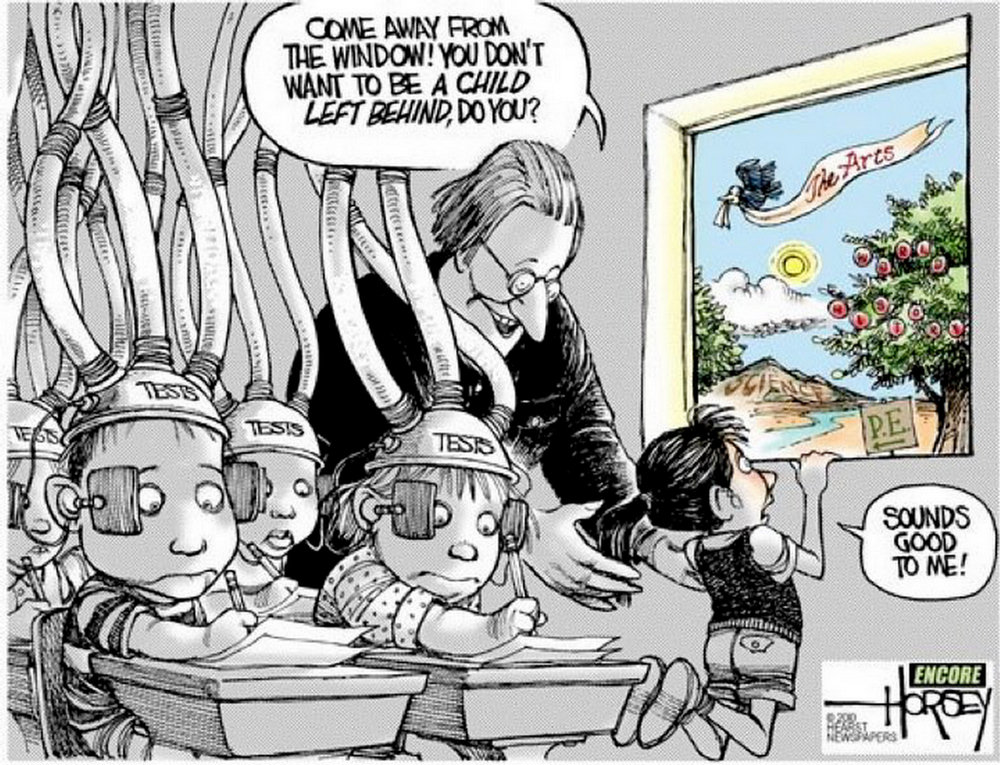
Being told that you cannot use your own language because you are in "America" is the same thing as saying as telling a child they cannot do something just because "you said so." It's forcing someone to not want to do something because you don't want them to is essentially just negative subjectivism and is morally wrong. In a learning setting, you want your students to preform to the best to their ability. If they want to use parts of their own language to help express their explanations in their writings they should be able to do and if you do not understand what they mean, how long does it take to go to Google Translate and type in the phrase. This doesn't advocate for the students to type entire sentences, paragraphs, papers, etc in their language, but just enough to give them freedom of style. Teachers should respect that the student has a certain style of writing, and let them write that way. What they shouldn't do is forcefully try to teach them to write to your standards. Students are not robots for teachers to program.
Thursday, September 3, 2015
What Identity Means to Me
Patrick Darling
English 1100
9-3-15
Prof. Young
English 1100
9-3-15
Prof. Young
What Identity Means to Me
For certain people, identity speaks to them in different ways, they have specific components that make up there identity more so then others. For example a very religious person might associate that with there identity more so then others, or a german teacher would be more associated with their language identity then others. For myself I see identity more of a expression of passion of anything. I define myself as an avid gamer and in to general media, such as tv shows, which is a massive sub-culture. I don't see other areas that make up ones identity as important, yes I am white, I speak english and I'm a male, that's the physical characteristics that people see about me that I could care less about. What is important about me is that I do play video games and watch a lot of TV shows, that is how i spend free time, and i project this sub-culturistic way of life in my apparel, speech and problem solving skills.
You can tell a lot about ones identity by looking at the way they dress. Do they wear designer clothes? They might be in a higher social class to afford them. Are they wearing a hijab? You can probably deduct that they are Muslim. I display my love for the video games and shows I enjoy by incorporating them into my wardrobe, mainly by wearing graphic tees referencing said game or show. I can be a shy person, however if you get me talking about one of my favorite shows or games, and suddenly I become a more extroverted person. I want to be able you educate people or share mutual thoughts one the subject. Finally, I sometimes relate my way of thinking to things I am passionate about. If I have a hard decision to decide on, I might think back on how a person or character from a show or game might handle the situation. Also, when I am preforming a task that might not be ideal to me, like mowing the lawn, I will try to think of it as a game. It helps me want to finish the task at hand, and also makes it go by faster.
Monday, August 31, 2015
How to Tame a Wild Tongue
Patrick Darling
English 1100
8-31-15
Prof. Young
English 1100
8-31-15
Prof. Young
How to Tame a Wild Tongue
In the beginning of her story Anazaldua makes her connection of her past with a trip to the dentist, and how its hard for the dentist to work in her mouth because of her tongue being stubborn. This reflects how she was told to learn "American" speech, and to leave her old language, and essentially her culture behind. Her "stubbornness" still exists today with her writing as she still embraces her Chicano, Tex-Mex, etc language, still incorporating it into her speech and writing. It makes perfect sense why she does this too, why would she just try to write this in pure Spanish or English, when she is more comfortable using her language, even if some people (like me) might not get some of the words she used.
To a pure Spanish speaker the Chicano Spanish might seem like the nonstandard version of Spanish. I makes them seem like they are being called inferior even though the Chicanos just throw different flairs and words from english into their language. Just like with Spanish, there are different types of English. It might not be as noticeable as Spanish but different kinds of English defines English speakers identity. We have British English, Australian English, different kinds of American English too, depending were you live like: East Cost, Mid-West, California/West Coast, etc. I am also part of a somewhat secret language, people that are aware or are know what the things me and my friends say would also get our "Nerd Speak." Examples being like, "Hey Dante, wanna go frag some scrubs later?" However I wouldn't talk like this to others as they most likely would not get it, people like my parents or teachers, unlike my friends who would get it. Otherwise I speak like East Coast American, so I wouldn't be speaking like a British person.
"I am my language," means that the way you speak and the language you speak defines who you are. I'm not going to define myself as a for example as French, I don't know french, I would be defined as American, due to my very Americanish English that I speak. And that can be a part of my identity as when I speak that, people could tell that I'm most likely American with my American English. At the beginning of the story Anazaldua says how stubborn her tongue would be at the dentist, and it connects to the ending where she says how patient Chicanos are, and how they can hold on to their Chicano identity even after everything will rot out before they give up there language. Identity is important for everyone to have, identity is the reflection of you, who you are, how you act, what your interests are, and what makes you different from other people, Anazaldua would agree. In here school see was punished for using Spanish, were she was from, and then called a traitor for speaking english, even though thats whats spoken in the country. Being Chicano gave them the identity that they are a little of both but not the same as the two, they are unique.
"So, if you want to really hurt me, talk badly about my language. Ethnic identity is twin skin to linguistic identity-I am my language."
"There existed a sense of shame at being caught listening to our music. Yet I couldn't stop my feet from thumping to the music, could not stop humming the word, nor hide from myself the exhilaration I felt when I heard it."
"Stubborn, persevering, impenetrable as stone yet possessing a malleability that renders us unbreakable."
Anzaldua, Gloria "How to Tame a Wild Tongue." Teaching Developmental Writing. Ed. Susan Naomi Bernstein. Fourth ed. New York : Bedford/St. Martin's, 2013. 245-255. Print.
Subscribe to:
Posts (Atom)